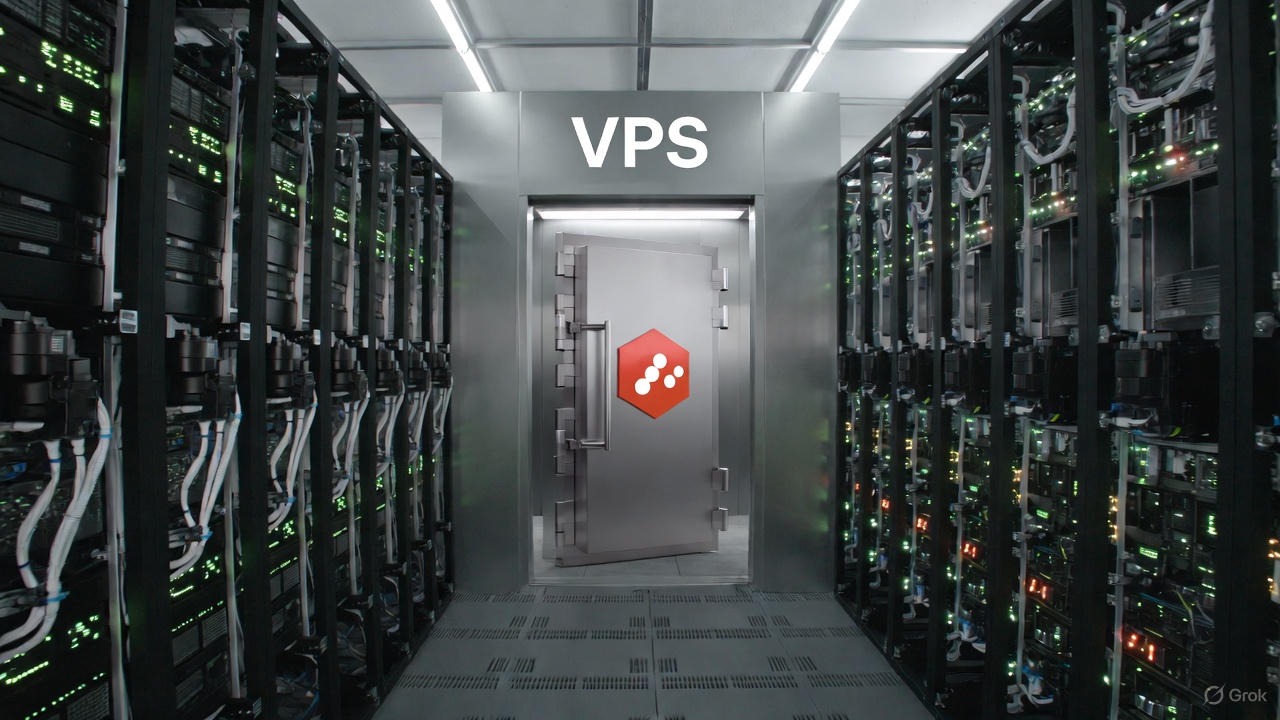
MongoDB on VPS: Secure and Scalable Database Hosting
For a data-driven service, the database is the crown jewels. It holds not just operational data, but often sensitive user information. Therefore, the two non-negotiable requirements for any database hosting solution are robust Security and elastic Scalability. While cloud-managed database services offer one path, they can be costly and often limit your control. For teams that require deep customization and cost-effectiveness, running MongoDB on VPS presents a powerful alternative, offering a best-of-both-worlds approach: total control without the overhead of physical hardware.
The journey of a database from a development prototype to a production powerhouse is fraught with challenges. A solution that is secure and scalable from the outset isn’t just convenient—it’s strategic. It prevents costly re-architecting later and builds user trust from day one.
Architecting for Security on a VPS
Security on a self-managed MongoDB instance is your responsibility, but a VPS gives you the tools to build a formidable defense.
- Network Isolation: The first and most critical step is to never expose your MongoDB port (27017) to the public internet. Your VPS’s firewall should be configured to only allow connections from your application servers (using their private IPs) and from your specific IP address for administration via SSH tunnel.
- Authentication and Authorization: Always enable MongoDB’s role-based access control. Create dedicated database users with the minimum privileges required for your application—never use the admin user for application connections.
- Encryption: Enable TLS/SSL to encrypt data in transit between your application and the database. For data at rest, you can use the VPS’s disk encryption or MongoDB’s native encryption.
- System Hardening: The VPS itself should be secured: key-based SSH authentication, a non-root user for administration, and automated security updates.
This layered security model, controlled entirely by you, often exceeds the baseline security of generic managed services.
Designing for Scalability from Day One
The scalability of MongoDB on VPS is two-fold: vertical and horizontal.
- Vertical Scaling (Scaling Up): This is your first and simplest option. As your dataset grows, you can upgrade your Cloudzy VPS plan—adding more RAM to expand your cache, more CPU for aggregation pipelines, and more SSD storage for your data. This is a seamless process that can handle significant growth.
- Horizontal Scaling (Scaling Out): MongoDB is designed for horizontal scaling via sharding. While more complex, a VPS environment is ideal for it. You can deploy a “config server” on one VPS and multiple “shard” servers on others, creating a distributed database cluster. This allows you to scale writes and storage capacity almost infinitely by adding more low-cost VPSes to your shard cluster.
This scalability path means you will never be trapped by your hosting choice. Your database can grow as large and serve as many requests as your business demands.
The Cloudzy Foundation for Data
Running a secure, scalable database requires a predictable and high-performance underlying infrastructure. Cloudzy VPS solutions provide this foundation. Their consistent I/O performance from SSDs is critical for database write durability and read efficiency. Their reliable networking ensures low-latency connections between your application and database VPSes, which is vital for both performance and security when using private networks.
When you make the strategic decision to buy VPS hosting for your MongoDB database, you are choosing a path of maximum control, security, and scalability. You are building your data layer on a foundation that you can shape precisely to your application’s needs, both today and as it evolves. For any service that relies on data, this control is not just a feature—it’s a cornerstone of long-term success.