Why Compostable Salad Bowls Are Becoming the Star of Healthy Dining in 2025
“Can packaging be as healthy as the food inside it?”
That’s the question a London salad bar owner asked when she realized her customers were posting pictures of her bowls—not just the salads. The reason? Her switch to biodegradable salad bowls made from natural, plant-based materials.
In 2025, sustainable packaging has become a badge of honor for health-conscious restaurants. It’s not just about taste anymore—it’s about trust. From bagasse to kraft paper, eco-friendly containers are reshaping the way the UK’s fast-casual and takeaway industry thinks about quality, brand image, and sustainability.
At the center of this transformation is Bioleader, a leading global manufacturer specializing in biodegradable and compostable tableware.
The Rise of Eco Dining: Numbers That Speak for Themselves
The UK Sustainable Restaurant Association reported that 78% of diners now prefer restaurants using compostable or recyclable packaging. Meanwhile, Statista (2024) found that over 65% of UK consumers associate sustainable packaging with premium food quality.
It’s not just about regulation anymore—it’s a lifestyle. Health-focused cafés, poke bars, and salad shops are embracing eco-packaging as part of their brand identity.
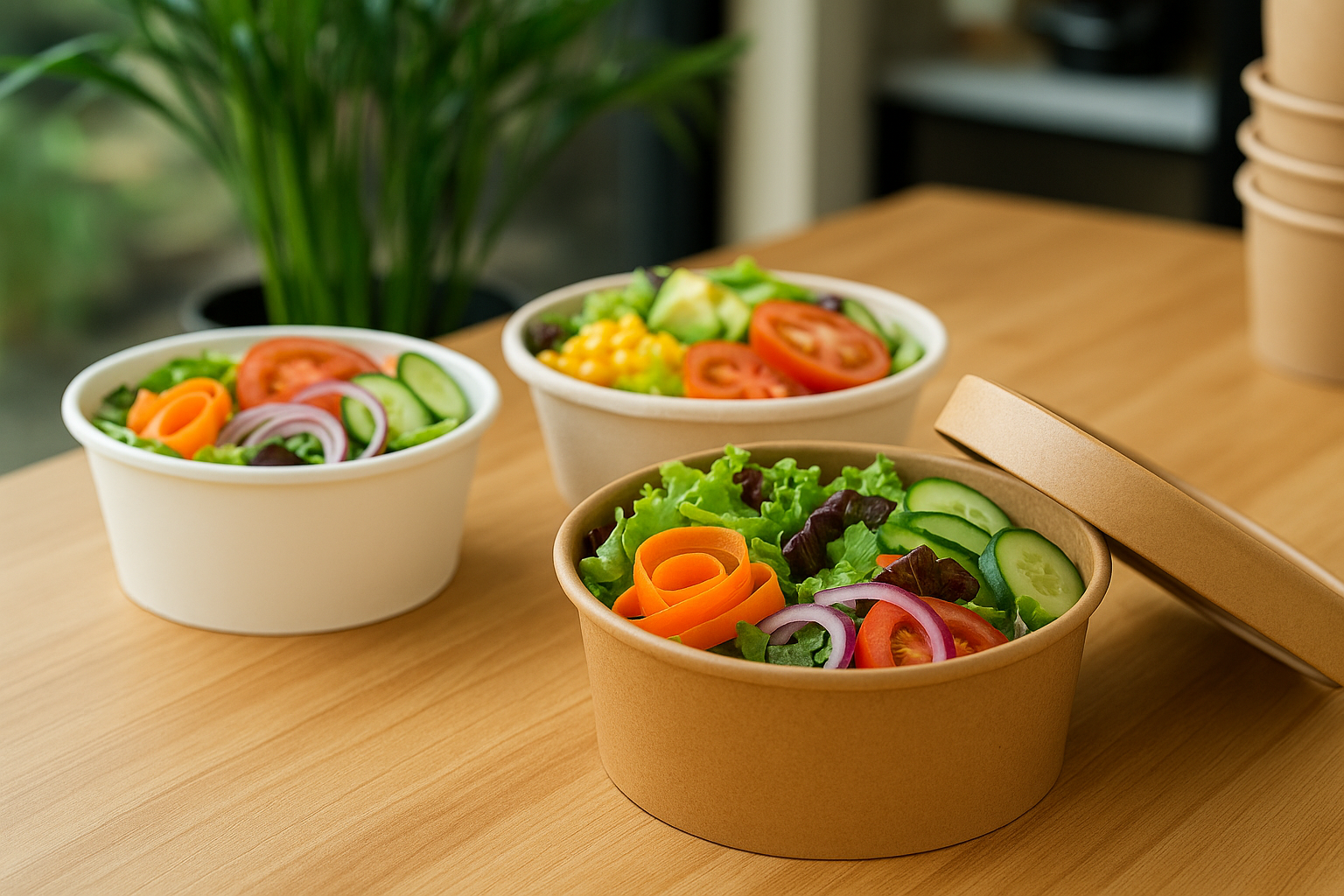
One of the biggest breakthroughs? The adoption of biodegradable bowls for salad made from sugarcane bagasse—a byproduct of sugar production. These bowls are heat-resistant, oil-proof, and fully compostable, breaking down naturally within 90 days.
Bagasse isn’t just eco-friendly—it’s beautifully practical. Lightweight yet sturdy, these bowls keep salads crisp, dressings contained, and conscience clear.
Compostable Salad Packaging: The New Normal
The UK takeaway salad market grew by 22% in 2024, driven by remote work and grab-and-go lifestyles. Yet, this growth came with a challenge: plastic waste.
Brands that switched to biodegradable salad bowls with lids found immediate benefits—both environmentally and financially.
Key advantages include:
- Temperature versatility: Suitable for both cold salads and warm grains.
- Leak-proof design: Prevents mess during takeaway and delivery.
- Premium appearance: Natural beige tones enhance organic branding.
- Compost certification: Meets EN13432 and ASTM D6400 standards.
For cafés, this means reduced waste management costs and better compliance with the UK’s Plastic Packaging Tax.
According to a Bioleader internal study, restaurants using compostable containers reported an average 18% rise in customer satisfaction and 12% repeat purchase growth.
Kraft Paper Salad Bowls: Simple, Stylish, Sustainable
Beyond bagasse, kraft paper has emerged as another hero material. Natural brown and white kraft bowls combine rustic aesthetics with strong functionality—perfect for healthy, colorful meals.
Bioleader’s kraft salad bowls (500–1800ml) are among the most versatile on the market. They come in multiple capacities, serving everything from small fruit portions to full lunch salads.
Why restaurants love kraft bowls:
- 100% recyclable and biodegradable
- Smooth surface for brand logo printing
- High grease resistance for oily dressings
- Stackable and lightweight for efficient storage
Whether used by salad chains in Manchester or poke shops in Bristol, kraft bowls give businesses a professional look that aligns with modern eco values.
Real Case Study: How “Greens & Co” Cut Waste by 68%
“Greens & Co,” a healthy café in Brighton, faced customer complaints about soggy salads and cracked plastic lids. In mid-2024, they switched to take-out salad bowls from Bioleader’s paper-based range.
After six months, their results were remarkable:
- Packaging waste reduced by 68%
- Customer satisfaction improved by 27%
- Instagram engagement rose due to “eco aesthetic” packaging photos
Their owner noted,
“We didn’t just reduce waste—we upgraded our brand.”
This trend is echoed across Europe, where premium salad bars are marketing compostable packaging as a selling point, not a cost.
The Science Behind Paper Bowls: How Are They Made?
Ever wondered how a simple paper bowl can resist hot soup or salad dressing without leaking? The answer lies in advanced fiber engineering.
Bioleader’s production lines follow a precise, sustainable process described in their detailed article What are paper bowls made of?
The process includes:
- Sourcing FSC-certified paper pulp from renewable forests
- Layering fibers under high temperature and pressure
- Applying water-based biodegradable coatings for moisture resistance
- Forming and testing each bowl for durability and compostability
The result is a functional, sustainable, and fully safe food container—ideal for both takeaway and dine-in use.
Why Bioleader Stands Out in the Green Packaging Race
While many suppliers claim to be “eco-friendly,” Bioleader backs it up with certifications, innovation, and global reach.
Highlights:
- ISO & EN13432 certified manufacturing facilities
- Custom branding for international food chains
- BPI, OK Compost, and FDA-approved materials
- Export clients across Europe, North America, and Asia
Bioleader doesn’t just make bowls—they help businesses tell a sustainability story that customers believe in. Their products are already used by major salad and smoothie chains across 50+ countries.
FAQ
Q1: Are biodegradable bowls suitable for hot meals?
Yes. Bagasse and kraft paper bowls are heat-resistant up to 100°C and maintain shape with liquids.
Q2: How long does it take for compostable bowls to decompose?
Under proper composting conditions, they break down within 90–120 days.
Q3: Can I customize the design with my restaurant logo?
Yes. Bioleader offers custom printing and bulk branding options for all product lines.
Q4: What’s the difference between bagasse and kraft paper bowls?
Bagasse is made from sugarcane fibers (fully compostable), while kraft paper is made from wood pulp (biodegradable and recyclable).
Q5: Are these products compliant with UK and EU food packaging standards?
Absolutely. Bioleader’s materials meet EN13432, FDA, and ASTM D6400 standards for compostable food packaging.
Conclusion: The Bowl That Defines a Generation
From London cafés to vegan kitchens in Leeds, one truth is clear: the container is now part of the meal experience.
Eco-conscious diners don’t just eat—they evaluate. The right packaging communicates freshness, responsibility, and care.
Brands that adopt Bioleader’s compostable bowls aren’t just serving food—they’re serving a future that aligns with global sustainability goals.
In 2025, the real recipe for success is simple:
Healthy food, sustainable packaging, and a planet that can keep feeding us all.