Food Warmer: Best 2026 Buying Guide for Every Kitchen
In restaurant service, consistency matters just as much as speed. Guests notice when soup cools too quickly, sides lose texture, or plated items sit too long before pickup. That is why choosing the right hot-holding equipment is not just a purchasing decision; it is a service decision. A well-matched food warmer helps protect temperature, improve workflow, and reduce stress during busy periods. GARVEE’s Restaurant & Food Service catalog also shows how broad this category can be, with options ranging from steam-table formats to proofing cabinets and countertop solutions.
The best model for your business depends on what you serve, how long you hold it, where you place it, and who interacts with it during service. A café, banquet hall, concession setup, and catering team may all need heat retention, but they rarely need it in the same way. This guide breaks down the main factors that matter before you buy.
Start With Service Style, Not Just Capacity
Many buyers begin with pan count or overall volume. That makes sense, but it is not the smartest first step. Start with service style instead.
Ask yourself a few simple questions:
- Is the unit for self-service, staff service, or kitchen pass-through?
- Will it stay in one place or travel to events?
- Is it meant for short holding during a rush or longer holding across a service window?
- Will it support one signature item or a changing menu?
These answers shape almost everything else. A fixed buffet station usually needs a different solution than a mobile catering line. A concession stand that serves one hot item all day has different priorities than a banquet setup that rotates pans, lids, and serving utensils every hour.
When you define the actual job first, it becomes much easier to narrow down the right format, heat source, and footprint.
How to Match a Food Warmer to Your Menu
Menu type should guide your selection more than appearance or price alone.
Moist items such as soups, gravies, sauces, chili, mashed potatoes, and braised dishes usually benefit from gentle, even heat. Products that dry out easily need holding conditions that preserve texture rather than blasting heat from one spot. Fried items, baked goods, and plated components may need a setup that keeps them hot without adding too much humidity.
A practical way to think about it is this:
- Wet, saucy, or ladled foods need steady, forgiving heat
- Crisp items need protection from sogginess
- Delicate foods need stable temperatures without overcooking
- High-turnover menu items need fast access and easy pan changes
This is why one business may prefer a countertop bain-marie style setup, while another leans toward a cabinet or a dedicated display unit. If your menu is mixed, flexibility matters. Removable pans, adjustable dividers, and multiple wells can make daily service far easier than a one-shape-only design.
Capacity, Footprint, and Pan Configuration
It is easy to overbuy. Operators often imagine their busiest day, choose the largest unit available, and then discover it takes up too much room, uses more energy, and stays half empty on normal days.
Instead of guessing, look at actual production flow. Count how many hot items must be available at the same time. Then consider refill rhythm. A smaller unit that is refilled efficiently can outperform an oversized one that occupies valuable workspace and slows service.
Pay attention to:
Pan layout
Do you need full-size pans, split pans, or a mixed configuration? A split layout gives you more variety, which is helpful for combo service, toppings, sauces, or side dishes.
Counter space
Measure the real working area, not just the open spot where the unit might sit. You also need room for ladles, trays, lids, plates, cords, and staff movement.
Service volume
A light-duty setup may be enough for a small café or office event, while banquet and buffet operations usually need more capacity and faster replenishment.
Refilling method
Think about who will swap pans and how often. A design that looks fine online may become awkward in practice if it is hard to lift, drain, or reset between batches.
The right size is the one that supports your busiest realistic service pattern without turning your line into a crowded obstacle course.
Heat Source, Control, and Recovery Time
Not all hot-holding equipment performs the same once service starts. Some units heat quickly but struggle to recover after the lid is opened repeatedly. Others hold more evenly but take longer to reach working temperature.
That is why temperature control matters in daily use, not just on a product spec sheet.
Look for features that support practical operation:
- Clear control settings that staff can understand quickly
- Even heat distribution across the holding area
- Reliable recovery after repeated opening and closing
- Safety features that reduce the risk of dry operation or accidental overheating
- Covers or lids that help reduce heat loss during slower periods
If several people will use the equipment, simple controls are a real advantage. Staff do not need a complicated interface during a rush. They need consistency, predictability, and easy cleanup once service is over.
For teams with changing menus, adjustable settings are more useful than a one-temperature-only setup. The right control range gives you more freedom to move from soups to sides to plated components without feeling locked into one narrow use case.
Build Quality and Cleaning Matter More Than Specs on Paper
The most impressive unit can become frustrating if it is difficult to clean, awkward to reload, or flimsy under pressure. Long-term satisfaction usually comes from practical design, not marketing language.
Prioritize materials and construction that support repeated use. Stainless steel remains a favorite in commercial environments for a reason: it is durable, easy to wipe down, and fits the look of most professional kitchens and buffet lines. Removable inserts, accessible corners, and easy-to-handle lids will save more labor over time than flashy extras.
Look closely at:
- Welds and seams
- Handle comfort
- Lid balance and hinge movement
- Drain options where applicable
- Pan fit and stability
- Cord placement and overall access
This is where product photos can be misleading. A sleek finish means little if daily cleaning becomes a chore. When comparing options, imagine the last 20 minutes of service, not just the first five. That is usually when good design proves its value.
When a Chafing Dish Is the Better Choice
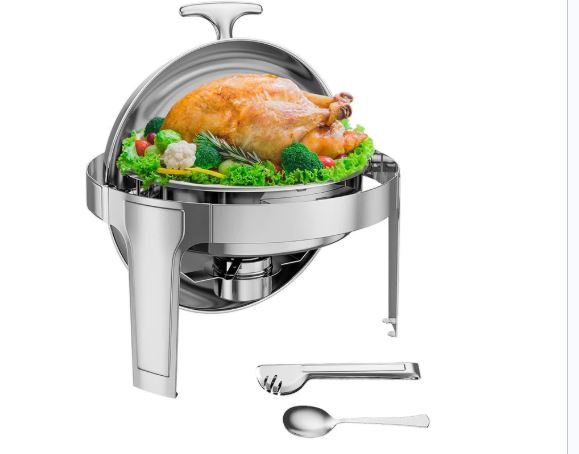
For buffets, banquets, weddings, and catered events, presentation matters almost as much as heat retention. In those cases, a chafing dish may be the better fit because it supports front-of-house serving while still keeping dishes guest-ready. GARVEE’s companion collection shows how varied this category is, with multi-pan layouts, round buffet sets, and several electric buffet-serving formats for different event styles.
The main advantage here is balance. You get function, display value, and flexible serving in one setup. That makes this format especially useful when guests are serving themselves or when the line needs to look polished in a visible event space.
Choose a chafing dish when:
- You want a buffet-friendly presentation
- Guests will lift lids and serve themselves
- Your service is event-based rather than all-day kitchen holding
- Appearance is part of the guest experience
- Portability matters
That said, do not choose style over workflow. If your operation needs back-of-house reliability, frequent pan swaps, or long holding windows, another format may still be the smarter buy. The best event setup is the one that looks professional and works smoothly under pressure.
A Simple Buying Checklist Before You Order
Use this quick checklist before making a final decision:
- What foods will you hold most often?
- How long will they typically stay in the unit?
- Is the setup front-of-house or back-of-house?
- How much counter or transport space do you truly have?
- Do you need single-item holding or multi-item flexibility?
- Will the unit stay put or move to off-site events?
- How easy is it to clean between services?
- Can staff operate it confidently without extra training?
If you can answer those questions clearly, you are much less likely to choose the wrong format.
Common Mistakes That Lead to Regret
A few buying mistakes show up again and again in foodservice operations.
Buying for occasional peak demand only
It is smart to plan for busy days, but buying around rare extremes can leave you with bulky equipment that is inefficient the rest of the year.
Ignoring the menu
One holding solution does not work equally well for every dish. Match the unit to what you actually serve.
Overlooking cleaning time
If sanitation takes too long, staff will dislike using the unit, and that affects consistency.
Choosing appearance over function
A beautiful buffet line is valuable, but only when it performs reliably during service.
Forgetting workflow
Think about where pans are filled, where lids open, where utensils rest, and how staff move during a rush. Equipment should support movement, not fight it.
FAQ
What size should I choose for daily service?
Start with the number of hot items you need available at one time, then factor in how often you can refill. Smaller operations often do better with compact, efficient units, while buffet or banquet service usually needs more holding capacity and faster pan turnover.
Is electric always the best option?
Not always. Electric setups are often convenient for stable indoor service, but the best choice depends on location, access to power, portability, and how visible the equipment will be to guests.
Can one unit handle different menu items?
Yes, if the design supports flexibility. Mixed pan layouts, adjustable controls, and removable inserts make it easier to use the same setup for soups, sides, sauces, and other hot menu items across different services.
When is a buffet-style server the smarter buy?
It is a strong choice when guest presentation matters and self-service is part of the experience. That is especially true for catered events, banquet lines, and hospitality settings where visibility and convenience both matter.
Conclusion
The right buying decision comes down to fit. You are not simply choosing a piece of equipment; you are choosing how your team will hold, serve, refill, clean, and present hot items every day. A thoughtful purchase should support food quality, reduce service friction, and make staff work easier instead of harder.
If you focus on menu type, service style, space, cleaning needs, and real operating flow, you will make a stronger decision than someone who shops by price alone. In the end, the best food warmer is the one that matches your operation so well that it quietly improves service every shift.