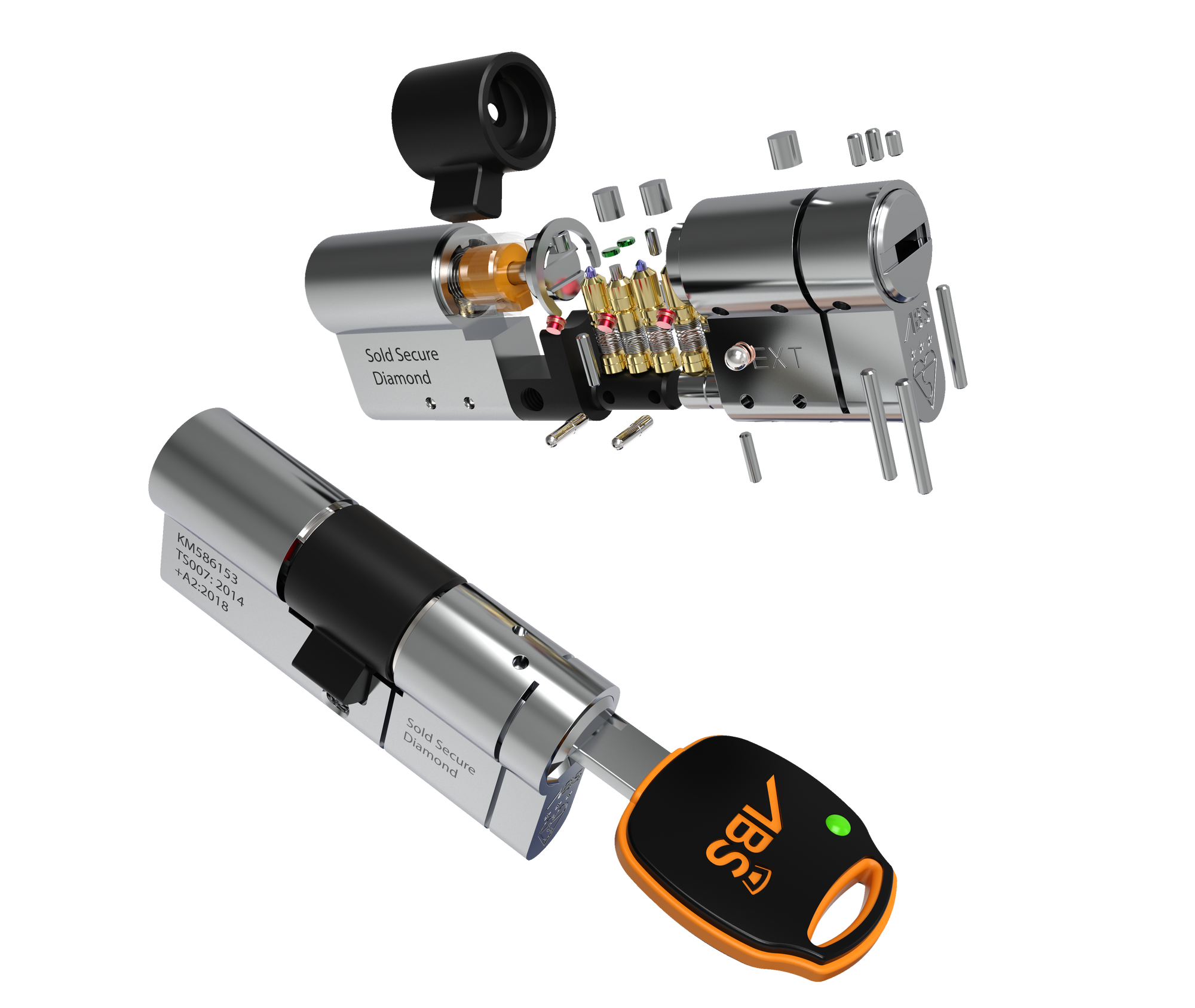
What Is a Euro Cylinder Lock and Is Yours Vulnerable to Snapping?
A euro cylinder is the key barrel used in many uPVC, composite, aluminium and some timber doors. If your front door has a long oval or euro-profile keyhole through the handle set, there is a good chance it uses a euro cylinder. The cylinder is only one part of the locking system, but it is an important one because it controls whether the mechanism can be locked and unlocked.
Euro cylinders are common because they are convenient, replaceable and available in many sizes. Accodring to locksmith experts LocksmithLocal, the problem is that older or basic cylinders can be vulnerable to lock snapping, a forced-entry method that attacks the cylinder rather than the whole door. The solution is not panic. It is checking what you have and upgrading where needed.
How a euro cylinder works
The cylinder passes through the door and lock case. When you insert the correct key, the internal pins align, the plug turns and the cam in the middle operates the lock. On a uPVC or composite door, turning the key usually locks or unlocks the multi-point mechanism after the handle has lifted. On some doors, the cylinder operates a sashlock or deadlock.
Euro cylinders come in different lengths because doors and handles vary. A cylinder might be 35/35, 40/50 or many other combinations. The measurement matters. Too short and it may not operate properly. Too long and it may protrude from the handle, creating a security weakness.
What is lock snapping?
Lock snapping is a physical attack on a euro cylinder. The attacker applies force to the protruding part of the cylinder, breaks it at a weak point and manipulates the remaining mechanism. It can be quick on basic cylinders, especially if the cylinder sticks out from the handle furniture. Doors with multi-point locks can still be vulnerable if the cylinder is poor, because the cylinder controls the locking mechanism.
Anti-snap cylinders are designed to resist this by using sacrificial sections, stronger materials and protected cams. Good security furniture can also protect the cylinder. The aim is to stop an attacker gaining control of the cam even if part of the cylinder is attacked.
Is your cylinder vulnerable?
You can do a few safe visual checks. With the door open, look at the cylinder from outside. It should not protrude significantly beyond the handle or escutcheon. A small amount may be normal depending on the furniture, but a long exposed cylinder is a concern. Look for security markings on the face of the cylinder or keys. Check whether the door is uPVC or composite and whether the cylinder is old, unbranded or a very basic model.
Do not remove the cylinder unless you know how to refit it correctly. If you do remove it, measure both sides from the centre fixing screw hole to each end. Do not guess based on the total length alone, because doors are often offset.
What should you upgrade to?
For many homes, a three-star anti-snap euro cylinder or a one-star cylinder combined with two-star protective security furniture is the common route. The exact choice depends on the door, handle set and risk. Look for cylinders that resist snapping, drilling, bumping and picking. Key control may also matter if you want to prevent unauthorised copies.
The best cylinder is not only high-rated; it is correctly sized. It should sit flush or near flush with suitable furniture. It should operate smoothly. It should come with the right number of keys and clear key-copying arrangements.
Thumbturn or key both sides?
A thumbturn cylinder has a key on the outside and a turn knob on the inside. It can improve convenience and emergency exit, especially at night. A double-key cylinder needs a key on both sides. Which is safer depends on the door.
Thumbturns can be a poor choice if there is glass or a letterplate close enough for someone to reach the turn. They can be a good choice where quick exit is important and the inside is protected. For rental or shared settings, fire safety and access arrangements may influence the decision. This is not a one-size-fits-all choice.
Cylinder snapping is not the only issue
A euro cylinder can also be vulnerable to drilling, picking, bumping or plug extraction, depending on quality. The surrounding handle furniture matters too. A strong cylinder in a weak handle may still be exposed. The door alignment matters because a strained mechanism can make people force the key, leading to wear or breakage.
Security should be viewed as a system: cylinder, handles, lock strip, keeps, hinges, frame and user habits. Upgrading the cylinder is often the best single step, but it is still one step.
Signs your cylinder needs replacement
Consider replacement if:
- The cylinder sticks out from the handle.
- You have an old basic cylinder with no anti-snap protection.
- Keys have been lost or stolen.
- You have just moved into the property.
- The key is stiff, loose or needs jiggling.
- There are marks around the cylinder after attempted entry.
- You want better key control or restricted key copying.
- Your insurer expects a higher security standard.
If the door also has a stiff handle or alignment issue, fix that at the same time.
Can you change a euro cylinder yourself?
Some homeowners can change a euro cylinder, but correct sizing and fitting are essential. The door must be open, the fixing screw removed, the cam aligned and the new cylinder installed without forcing. The cylinder should be tested with the door open and closed. If it binds, sticks or protrudes, the job is not finished.
DIY is not advisable if the door is locked shut, the key is missing, the cylinder is damaged, the mechanism is jammed or you are unsure about measurements. A locksmith can also check whether the handles and locking strip are suitable.
Do not wait for a break-in
Many lock upgrades happen after keys are stolen or a neighbour is burgled. It is better to check now. Euro cylinder upgrades are usually faster and less disruptive than dealing with forced-entry damage. If your current cylinder is basic, protruding or unknown, the risk is easy to reduce.